

On 20 June, during the market events of the 28th Shanghai International Film Festival, Lusheng Law Firm, together with its strategic partner Rouse, jointly released for the fourth consecutive year the industry IP report entitled “Research Report on the Development and Protection of Intellectual Property in China’s Film and Television Industry (2025)”.
The press conference was jointly presented by Wang Shan, Director of Lusheng’s Shanghai Office and Co-head of the Entertainment Law and Dispute Resolution Practice, and Tian Yanyang, Head of Research, Greater China, at Rouse, who provided an in-depth analysis of trends in IP protection in the film and television sector. The report has attracted extensive attention from the film and television industry both in China and abroad.
Highlights of the Press Conference
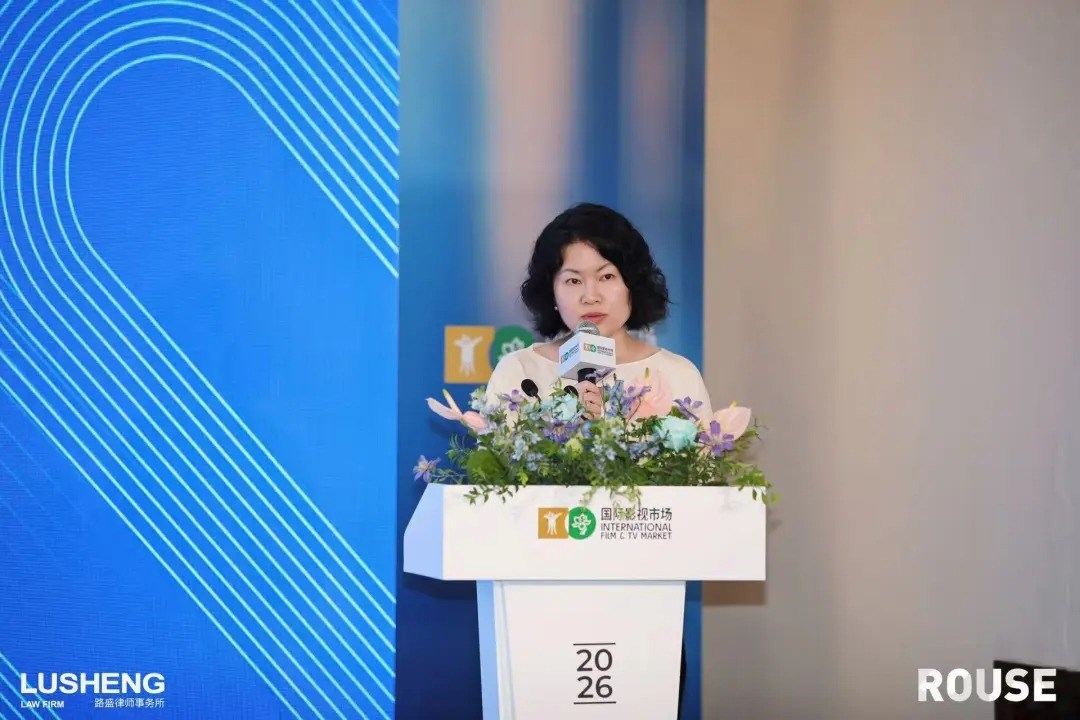
Wang Shan
Director of Lusheng’s Shanghai Office
Co-head of the Entertainment Law and Dispute Resolution Practice
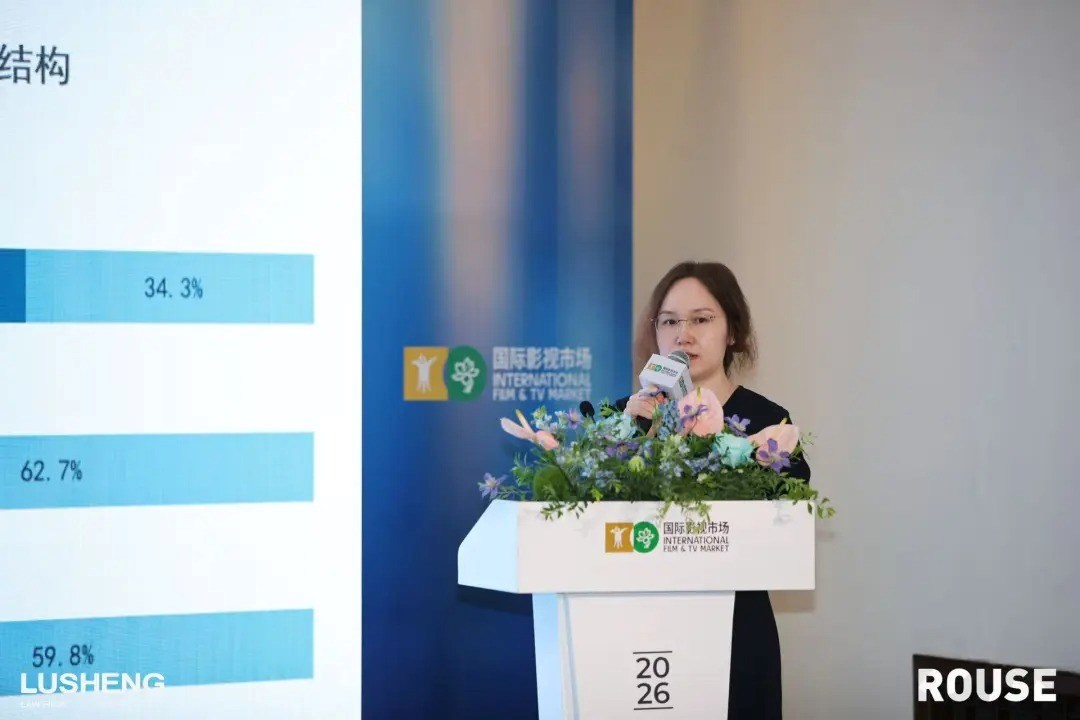
Tian Yanyang
Head of Research, Greater China, Rouse
At the press conference, Attorney Wang Shan and Ms. Tian Yanyang shared in depth the latest research findings and cutting-edge issues from the “Research Report on the Development and Protection of Intellectual Property in China’s Film and Television Industry (2025)”, and discussed the following key points:
In 2025, China’s box office reached RMB 51.832 billion, representing a year-on-year increase of 22% and ranking second globally. Domestic films accounted for nearly 80% of the box office, and animated films experienced explosive growth.
During the same period, the number of copyright registrations and the proportion of registrations for film and television works remained generally stable. In 2025, the total number of registrations nationwide reached the tens of millions (10,677,043 works); registrations for film and television works reached 134,000.
Robust Growth in the Licensed Consumption Market
From 2019 to 2024, the value added of China’s copyright industry increased from RMB 7.32 trillion to RMB 10.06 trillion, with its share of GDP steadily rising to 7.46%.
In 2025, the IP licensing industry exhibited three new characteristics: “legacy IPs” such as “The Most Beautiful Journey to the West” achieved cross-community dissemination through “new operations”; designer toy IPs saw explosive performance growth with AIGC technology embedded throughout the entire value chain; and the park economy represented by Fantawild Holdings evolved from “theme parks” to “lifestyle” destinations.
Explosive Growth of the AI Comic-Drama Industry, with Copyright Compliance and Governance as the Key to Breakthrough
The AI comic-drama sector entered a period of rapid growth in the second half of 2025—by Q1 2026, total views were approaching 130 billion, with a month-on-month increase of 78.9% in March. The depth of market penetration and the explosive power of traffic in this track are remarkable, while various types of infringement, such as unauthorized adaptations or “pixel-level copying”, have become increasingly prominent.
At the regulatory level, “AI comic-dramas” have been brought within the scope of micro-short dramas in animated forms such as AIGC and comics. In 2025, the National Radio and Television Administration raised investment thresholds and optimized review authority; the Cyberspace Administration launched the “Clean and Bright” special campaign to address issues such as AI “magic alteration” and “digital swill”; and platforms established filtering mechanisms and centralized clean-up mechanisms.
Legal Protection of Actors’ Digital Assets and Virtual Likenesses
The core issue lies in the reconstruction of the boundaries between personality rights and property rights—biometric features such as real persons’ facial characteristics, vocal qualities, and body movements are extracted, modeled, and commercialized.
Certain existing international cases provide references for mechanisms such as posthumous authorization and dual authorization. Under the domestic legislative framework, the Administrative Measures for Digital Virtual Human Information Services (Draft for Comments) plan for the first time to establish unified governance of virtual digital human issues, while in judicial practice there are corresponding cases concerning portrait rights, voice-related rights and interests, and general personality rights.
Chinese IP Going Global: From “Going Out” to “Going In”
In 2025, overseas revenue from games exceeded USD 20.4 billion, surpassing RMB 100 billion for six consecutive years. Chinese games going global are shifting from “product export” to “cultural IP export”. The trend of designer toy IPs, represented by POP MART, being “driven by overseas markets” has become increasingly evident. As for micro-short dramas going overseas, their “localization” essentially represents a leap in IP development logic from “content export” to “localized IP incubation”.
The success of IP going global is half commercial strategy and half intellectual property deployment. Right holders need to adopt multi-layered protection strategies: strengthening copyright registration, trademark applications, and customs recordals in destination countries; enhancing monitoring on e-commerce platforms and cooperating with local law enforcement authorities; employing technologies such as digital watermarking and blockchain for traceability and anti-counterfeiting; and at the same time implementing targeted deployment and responses based on different categories.
Continued and Significant Effectiveness of the “Dual-Track Protection” of Administrative and Judicial Enforcement
A series of new laws and regulations in 2025 increased the amount of damages for IP infringement and the application of punitive damages, and also enhanced the standardization of administrative enforcement, particularly as the regulatory system for labeling AI-generated synthetic content has been gradually improved.
Administrative protection of intellectual property in China’s film and television industry has continued the “online + offline” coordinated governance model. Through the ongoing deepening of special campaigns such as “Sword Net 2025” and “Sword Shadow 2026”, the improvement of multi-agency coordinated governance mechanisms, and the precise empowerment of technological means, a three-dimensional protection system covering both online and offline and both domestic and overseas has been established.
In the judicial field, several high-compensation cases have arisen from disputes between long-form and short-form videos. For example, in August 2025, the Guangdong High People’s Court applied punitive damages in the short video infringement case involving “The Irresistible”, ordering a certain platform to pay RMB 60 million in damages; in the same month, the Chongqing High People’s Court applied one-time punitive damages in the case involving infringing clip videos of “Lost You Forever” on a certain platform, with damages approaching RMB 30 million.
At the same time, forms of copyright infringement in AI-related film and television works have become increasingly diverse. Many platforms, under the combined impetus of judicial and regulatory forces, have established relatively sound filtering and copyright complaint mechanisms, and cases in which exemption from liability is granted based on the “safe harbor principle” are on the rise.
Attorney Wang also analyzed, with reference to several current high-profile cases, IP protection and litigation strategies that take into account public opinion and other factors in a comprehensive manner.
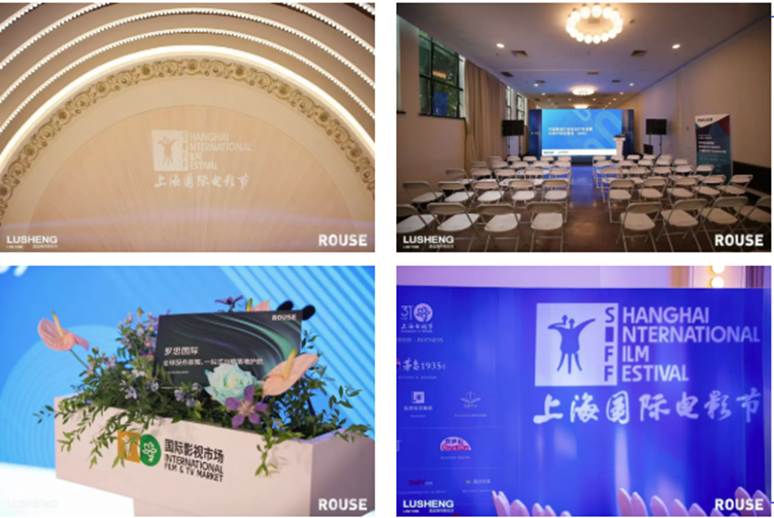
Photos from the event
Report Request
The report has been made available on online platforms during the Shanghai International Film Festival
Please scan the code to obtain the full electronic version
*This material is only sent to corporate personnel, thank you for your understanding

Lusheng’s Entertainment Law Services
Lusheng’s entertainment law services cover the entire life cycle of cultural and entertainment film and television brands, from IP creation and incubation, IP release and promotion, and IP derivatives and development, to IP protection and enforcement.

We are committed to helping clients avoid intellectual property risks at all stages of film and television entertainment projects, including contractual and infringement risks arising from project initiation and development, filming and production, publicity and distribution, and subsequent value realization. We strive to provide comprehensive IP protection for film and television entertainment projects and to maximize the commercial value of IP.
At the same time, Lusheng has achieved remarkable results in handling pioneering and complex cases with significant impact. More than 140 related cases handled by the firm have been selected as typical cases by courts, procuratorates, and other professional institutions at various levels.
Rouse Speaker
Tian Yanyang
Head of Research, Greater China
Rouse
Email: atian@rouse.com