
In December 2024, the General Office of the State Council issued the Opinions on Comprehensively Deepening the Reform of the Supervision of Drugs and Medical Devices and Promoting the High-quality Development of the Pharmaceutical Industry (Guo Ban Fa [2024] No. 53). In these Opinions, the State Council explicitly pointed out the need to accelerate the patent deployment of original achievements in drugs and medical devices, and to improve patent quality and the efficiency of transformation and utilization. From 2019 to 2024, the number of patent applications filed by Chinese innovative pharmaceutical enterprises showed a compound annual growth rate of 34%, among which the proportion of combination patents jumped from 12% to 41% (data source: China National Intellectual Property Administration), reflecting the transformation of the Chinese pharmaceutical market from “generic following” to “innovation protection”. In the process of shifting from generics to innovation, how to achieve comprehensive protection of innovative pharmaceutical products through patent filing strategies and asset portfolio management, and thereby safeguard product commercialization, is a key issue faced by all innovative pharmaceutical companies.
Dapagliflozin is a blockbuster drug developed by AstraZeneca for global commercialization for the treatment of type II diabetes mellitus. Although its compound patent in China expired in 2023, according to AstraZeneca’s 2024 annual report, dapagliflozin still achieved sales of RMB 3.5 billion in China, setting a new record in the Chinese oral hypoglycemic drug market. This phenomenon breaks the conventional expectation of a “patent cliff” for originator drugs. The successful practice of strategic patent deployment for dapagliflozin in China provides a successful case worthy of study.
Dapagliflozin Compound
Dapagliflozin is the world’s first approved SGLT2 inhibitor for the treatment of type II diabetes mellitus, and its active compound is a phenyl glucoside compound. Its mechanism of action is unique: by inhibiting the renal reabsorption of glucose, it allows excess glucose to be excreted in the urine. This non–insulin-dependent hypoglycemic pathway opens a new door for the treatment of diabetic patients. Clinical data in China show that it can reduce HbA1c by 0.8%, with efficacy significantly superior to traditional drugs.
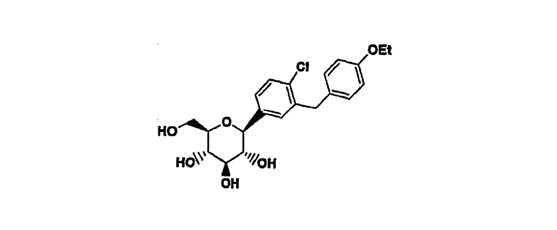
(Molecular structure of the active compound of dapagliflozin)
Achieving Market Expansion Through Volume-for-Price Strategy
After its approval and launch in China in 2017, dapagliflozin entered the National Reimbursement Drug List through price negotiations in 2019, with a price reduction of more than 20%, becoming the first SGLT2 inhibitor included in China’s medical insurance. Although this strategy reduced the drug price to the lowest level worldwide—the unit price per tablet in the United States is as much as six times that in China—the “volume-for-price” strategy produced immediate effects. According to AstraZeneca’s annual report, as of 2023, dapagliflozin had covered 80% of Class III Grade A hospitals nationwide, with annual sales exceeding RMB 3.5 billion (approximately USD 481 million), accounting for nearly 10% of the global market share.
More noteworthy is its indication expansion strategy. From the initial indication of type II diabetes mellitus, a new indication for chronic kidney disease was added in 2022, expanding the patient population by threefold, which confirms a growth model in which clinical value drives market expansion.
Patent Deployment of Dapagliflozin in China
The dapagliflozin compound was originally researched and developed by Bristol-Myers Squibb Company in the United States, with the first application filed in the United States in May 2002 (US10/151436), and a PCT international application (WO2003099836A1) subsequently filed claiming priority from that U.S. application, which then entered China in 2004 (CN03811353.8). For better commercial operation, Bristol-Myers Squibb Company assigned the patents related to dapagliflozin to AstraZeneca AB (Sweden) in 2014.
Due to the early filing date of the dapagliflozin compound patent and the stringent administrative approval procedures for drug registration, the time to market for the drug was seriously delayed. When dapagliflozin was approved for marketing in China in 2017, it faced the dilemma that the compound patent would expire five years later, in May 2023. In order to mitigate the impact of the shortened term of protection of the compound patent, a comprehensive patent deployment was carried out for the dapagliflozin product in China.
Through search and analysis, the author has sorted out a patent protection system consisting of 26 Chinese patents built around dapagliflozin, including
➤ Core-layer Defense (Basic Compound and Process Barriers)
- Compound patents: (CN100534997C (Application No. CN03811353.8) and its divisional applications) focus on the structure of phenyl glucoside compounds and form cross-protection with multiple divisional applications, covering the molecular entity of dapagliflozin and its intermediates for preparation, thus creating a “hard threshold” for the development of generic drugs.
- Preparation method patents (CN100391963C (Application No. CN200380110040.1) and its divisional applications) provide comprehensive protection for the synthetic routes of various SGLT2 inhibitors including dapagliflozin, and, through an acetyl protection strategy, provide a preparation method with high purity and high yield. Divisional applications cover preparation methods of key process intermediates, forming multi-level protection.
➤ Intermediate-layer Reinforcement (Polymorph and Formulation Patents)
- Polymorph patents (CN101479287B (Application No. CN200780024135.X) and CN101468976B (Application No. CN200710300419.9) and their divisional applications) relate to the development of different solvent-complex crystals of dapagliflozin, and innovatively select S-configuration propylene glycol to form solvent-complex crystals with dapagliflozin, thereby obtaining stable crystal forms suitable for industrial formulation and solving the problem that dapagliflozin itself is difficult to crystallize. Through divisional applications, protection is extended to other novel solvent-complexes of dapagliflozin in addition to the propylene glycol complex, thereby comprehensively building patent protection barriers and preventing the use of other types of solvent complexes as a design-around strategy.
- Immediate-release formulations (CN104382859B (Application No. CN200880016902.7) and its divisional applications) use the S-propylene glycol solvent-complex of dapagliflozin as the core component of the pharmaceutical formulation to obtain an oral dosage form with stable efficacy. This is currently the only formulation composition worldwide that uses a propylene glycol solvent-complex as the active ingredient. This innovation solves the technical problem of the difficulty in formulating dapagliflozin itself, thereby obtaining a stable and effective oral formulation. These formulation patents, together with the polymorph patents, have become core patents that are difficult for generics to circumvent while ensuring consistency of efficacy.
➤ Peripheral-layer Extension (Indication Patents)
- Twelve medical use patents cover different indications such as heart failure, chronic kidney disease, hyperuricemia, and prevention of diabetes, forming a closed loop in which the discovery of new blue oceans is immediately followed by the construction of patent protection.
This “basic protection + technological blocking + market extension” three-layer architecture has built a 360-degree protection system for the product.
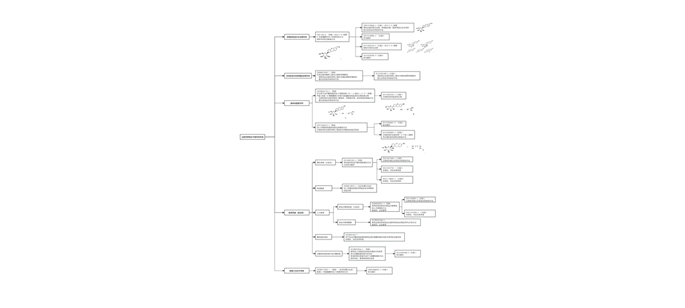
Protection of Product Competitive Advantage Through Sound Patent Deployment: Insights from the Dapagliflozin Case
Dapagliflozin has built basic barriers through core-layer patents (compound and preparation methods), while peripheral-layer patents (polymorphs, formulations, indications) form extended defenses, thereby setting multiple obstacles to the production of generic drugs both technically and legally.
➤ High Threshold for Technical Design-around
The polymorph and formulation patents of dapagliflozin directly raise the R&D threshold for generic drugs. Taking polymorph patents as an example, simple polymorphs of dapagliflozin are not easy to prepare. If generic manufacturers wish to circumvent originator protection, they must invest several years in developing alternative polymorphs; however, the development of new polymorphs is highly unpredictable and may fail bioequivalence verification due to insufficient stability. Such technical barriers generally extend the R&D cycle of generics by 3 to 5 years or more, far exceeding the window period after the expiry of the compound patent.
➤ Ongoing Legal Defense Pressure
Under China’s drug patent linkage system, generic manufacturers must choose between a “deferred marketing” declaration or a “patent invalidation challenge” declaration before applying for marketing authorization, forcing competitors into a cycle of “declaration–litigation–invalidation challenge”, thereby effectively delaying market competition. Data from 2024 show that, among 34 patent invalidation requests against dapagliflozin, only one use patent was revoked, with a maintenance rate of core patents exceeding 80%. As a result of unsuccessful challenges to formulation patents, generic manufacturers not only bear high litigation costs, but their marketing plans may also be postponed.
➤ Extension of Market Exclusivity Period
Through “patent relay”, the market exclusivity period of dapagliflozin has been extended from 2023 to 2028. After the expiry of the compound patent, polymorph and formulation patents form a second line of defense, while patents for new indications such as chronic kidney disease further extend the protection period. The effectiveness of this strategy is directly reflected in the sales data: even in the face of generic competition, dapagliflozin still ranked first in the market in 2023 with sales of RMB 3.5 billion, confirming the strong extension effect of a sound strategic patent deployment on the market exclusivity period of dapagliflozin.
Implications for the Pharmaceutical Industry
The success of dapagliflozin in the Chinese market reveals how multinational pharmaceutical companies respond to generic competition through systematic patent deployment and legal strategies. Faced with the risk of imminent expiry of core compound patents, enterprises have extended the product exclusivity period to 2028 through layered deployment, legal offense and defense, and policy coordination, thus providing a replicable strategic model for innovative pharmaceutical companies.
At the same time, the patent deployment case of dapagliflozin marks that the Chinese pharmaceutical market has entered a stage where “competition in innovation quality” and “games of patent deployment” proceed in parallel. For local Chinese pharmaceutical enterprises, it is necessary to break through the passive mindset of “patent avoidance” and shift to the proactive deployment of “innovative patents”. At the stage of initiating new product R&D projects, enterprises should plan a “four-dimensional protection system” covering compounds, polymorphs, dosage forms, and indications, and establish a “R&D–patent–market” linkage mechanism, embedding patent deployment deeply into product lifecycle management, so as to truly achieve the leap from “technology follower” to “rule maker”.
Although the company has recently been embroiled in various controversies, this article discusses in a dialectical manner only its patent strategy in relation to this particular drug, without involving other factors.