

On 7 September, during the China Trademark Annual Conference, the “Corporate Cross-border Brand Protection Salon,” jointly hosted by the China Trademark Association and the Shanxi Trademark and Brand Standardization Construction Promotion Association and organized by Rouse, was successfully held in Taiyuan. Focusing on the key issues and challenges of cross-border brand protection in the course of Chinese enterprises “going global,” the salon invited representatives from the China National Intellectual Property Administration (CNIPA), Customs, and industry experts to share and exchange in depth on practical strategies for international registration, customs protection, and brand protection in the European, Southeast Asian and Middle Eastern markets.
Lusheng Law Firm, together with its strategic partner Rouse, brought several senior experts from its offices in China and abroad to speak at the salon, and, together with official representatives, provided rich analysis of legal market developments and practical experience sharing.
International Trademark Registration Safeguarding Enterprises Going Global

Yang Linli, Deputy Director, Division I of International Registration, China National Intellectual Property Administration
Yang Linli stated that the international trademark registration system plays a supporting role in enterprises’ efforts to “go global.” Citing the latest data, he pointed out that Chinese enterprises are facing increasingly serious trademark squatting in overseas markets, particularly in countries along the Belt and Road. He introduced the Madrid System, which has a history of more than one hundred years, and elaborated in detail on its advantages of “one application, protection in multiple countries,” covering aspects such as language, costs and centralized management. He emphasized that Chinese applicants are proactive in using the Madrid System, with the average number of designated countries per application exceeding the global level, which reflects the forward-looking awareness of Chinese enterprises in their international deployment and also shows that systematic use of the Madrid System has become an important means of cross-border brand protection for enterprises.
Customs Protection of Intellectual Property Rights Facilitating Cross-border Expansion of Enterprises

Zhao Zhonghua, Deputy Director, Division I of Comprehensive Business, Taiyuan Customs
Zhao Zhonghua stated that customs protection of intellectual property rights is an important safeguard for the overseas expansion of corporate brands. Through both ex officio and application-based models, Customs provides two-way protection of intellectual property rights such as trademarks, patents and copyrights at import and export stages, and, relying on the recordal system, special enforcement campaigns and smart law enforcement tools, continuously combats infringement and illegal activities. She recommended that enterprises complete customs recordal in a timely manner, proactively maintain rights information, and actively cooperate with customs in investigations and confirmation of rights, so as to efficiently safeguard their legitimate rights and interests.
Practical Strategies for Brand Protection in the European Market
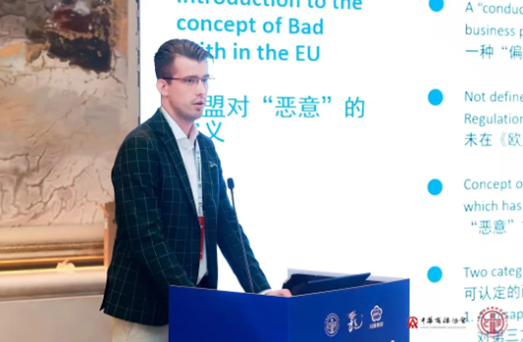
Matti Lindberg, Attorney, Rouse Sweden Office
Matti Lindberg pointed out that repeat applications for EU trademarks must be supported by genuine commercial intent; otherwise, they may be regarded as an abuse of the trademark registration system. In recent years, Chinese applicants have become the largest source of EU trademark applications, and common issues encountered include transliteration-based squatting and the determination of genuine use. He suggested that enterprises may combine EU design protection as a low-cost and efficient supplementary strategy, and conduct targeted searches and monitoring for key markets such as Germany and France. Overall, in enforcing rights in Europe, it is necessary to focus on differentiated strategies, preservation of evidence and proactive monitoring, in order to systematically address intellectual property challenges in the European market.

Melanie Zhu, Partner, Principal,Head of Shanghai Trade Marks & Brands Team·Trade Marks & Brands
Melanie Zhu, Partner, Principal, Head of Shanghai Trade Marks & Brands Team, Trade Marks & Brands, stated that, unlike Chinese trademark practice, repeat EU trademark applications filed without genuine intention to use and solely to circumvent use requirements may be found to be in bad faith. A similar trend has emerged in the UK this year, where the authorities proactively examine trademark applications that lack an intention to use (for example, where the description or classes of goods/services covered are overly broad, etc.) and issue examination reports. She advised that Chinese enterprises, when planning their deployment in Europe, should: prepare filing plans in advance, focus on core markets and competitors to optimize search and filing strategies; ensure that Chinese-character marks are used as trademarks, so as to avoid being regarded as decorative patterns; and collect and retain evidence of trademark use in a timely manner for future enforcement needs.
Trademark Defense in the Southeast Asian Market: Winning Strategies Against Squatting and Counterfeiting
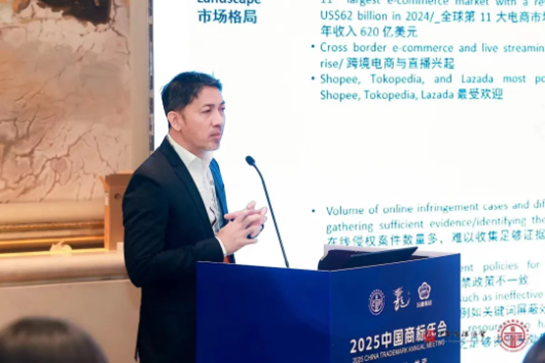
Edmund J. Baranda, Managing Partner, Baranda & Associates (Rouse Network Member, Philippines)
Edmund J. Baranda systematically analyzed the challenges and enforcement practices relating to intellectual property protection in the ASEAN region. He noted that ASEAN, as the world’s fifth-largest economy, has a counterfeit market valued at as much as USD 36 billion, with an increasingly evident trend of localized counterfeiting. ASEAN consists of ten countries whose laws, enforcement and remedies differ significantly, and the applicability of civil, criminal, administrative and customs measures varies from country to country. Therefore, Chinese enterprises expanding into ASEAN must formulate strategies tailored to the characteristics of each market. In addition, the rapid development of e-commerce and live-streaming sales has brought regulatory challenges, and brand owners must rely on platform codes of conduct and government cooperation to effectively combat counterfeiting.

Sophia Hou, Managing Partner of Guangzhou Office, China Head of Enforcement, Lusheng Law Firm
Drawing on enforcement practice in Southeast Asia, Sophia Hou pointed out that the region comprises many countries with widely differing systems, and that customs protection is unevenly developed overall. She emphasized that, compared with China's "super-strong protection," customs recordal in countries such as the Philippines and Indonesia started late, proactive seizures are rare, and enforcement relies heavily on post-fact investigations and complaints. She recommended that enterprises resolve disputes efficiently through attorney's letter negotiations, cross-border tracing and enforcement, and coordinated actions between Chinese and foreign parties, while paying close attention to compliance management.
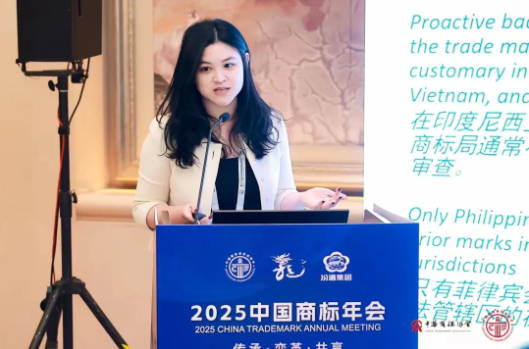
Fianka Permana, Trademark Manager, Rouse Indonesia Office
Fianka Permana systematically elaborated on key strategies for trademark registration and enforcement in Southeast Asia. While the Southeast Asian market has significant potential, the risk of trademark squatting is high, and in jurisdictions such as Indonesia, Vietnam and Thailand, rights holders often face difficulties in cancellation after registration and high evidentiary thresholds for non-use cancellation. Therefore, enterprises should plan registrations as early as possible and combine monitoring with the accumulation of evidence of use to avoid squatting and legal disputes. In addition, she suggested exploring the recognition of well-known trademarks (for example, in the Philippines, well-known trademark recognition may be initiated upon application) to strengthen the effectiveness of regional intellectual property protection.

Amanda Yang, Principal
Amanda Yang pointed out that intellectual property protection strategies in Southeast Asia must be highly localized, as the differences between countries are significant and domestic models cannot simply be transplanted. She cited as examples that in countries such as Indonesia and Thailand, procedures for cancelling registered trademarks are complex, the burden of proof is heavy, and cases are heard by the courts rather than administrative authorities, with stringent evidentiary requirements, long timelines and high costs. Recently, Indonesia has further extended the non-use cancellation period from three years to five years, thereby increasing the difficulty of enforcement. She advised that enterprises and peers must keep abreast of the latest legal developments in each country and maintain close communication with reliable local lawyers or agencies, so as to avoid strategic failures caused by systemic differences and information lag.
Breaking Through in the Middle East: Strategies and Practice for Brand Confirmation and Enforcement
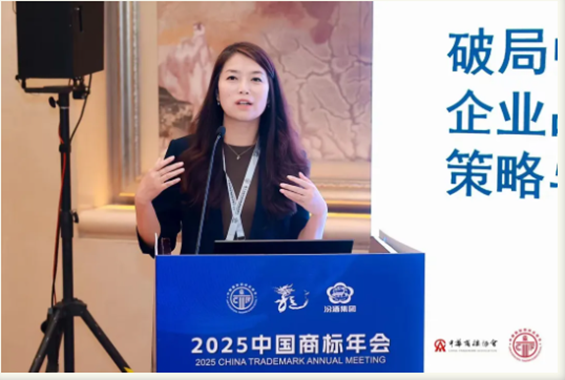
Hatty Cui,Principal, General Manager of China, China Head of Trade Marks & Brands ,Rouse China Office
Hatty Cui noted that the Middle East is transforming from a traditional energy hub into a global investment hotspot, and that China has become the largest source of imports and an important economic and trade partner for Saudi Arabia and the United Arab Emirates. She systematically compared the differences between Saudi Arabia and the UAE in procedures such as trademark application, opposition and cancellation, emphasizing that the systems in the Middle East are complex and the culture is unique, and enterprises should avoid directly transplanting domestic experience. She specifically reminded enterprises to pay attention to the requirement in Saudi Arabia for powers of attorney to be legalized under the Hague Apostille Convention, the time-consuming embassy legalization procedures in the UAE, and key differences in the burden of proof and response deadlines in opposition and cancellation proceedings in both jurisdictions. She further recommended that enterprises, by combining localized strategies, long-term monitoring and proactive action, and relying on reliable local partners, effectively build a brand “moat.”
Insights into the Global Intellectual Property Industry Landscape

Jeremy Newman, Chief Commercial Officer, Rouse UK Office
From a global perspective, Jeremy Newman shared his observations on key trends in the field of intellectual property. He pointed out that intellectual property activity is on a trajectory of continuous growth, a process that is clearly being profoundly influenced by artificial intelligence and geopolitical factors. At the same time, corporate intellectual property functions are undergoing profound transformation, shifting from traditional rights custodianship to value creation, and technological empowerment is enabling them to handle more complex issues, with the organizational form of IP functions beginning to break out of the traditional legal department framework. In addition, the intellectual property services industry is facing dual pressures of consolidation and efficiency enhancement, and there is an urgent need to respond to client demands in a more global, efficient and cross-disciplinary manner. Finally, he emphasized that the industry should actively build global product portfolios, accelerate investment in technology, and continuously expand the boundaries of services, so as to support enterprises in building sustainable competitive advantages in a rapidly changing environment.
Event Highlights


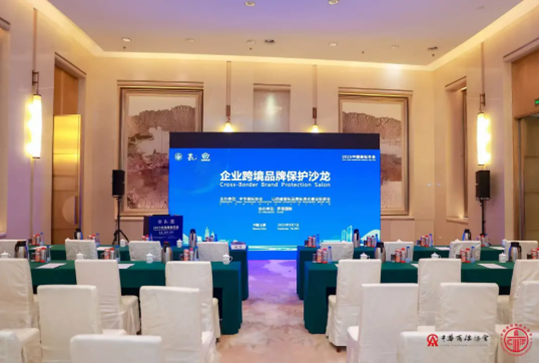

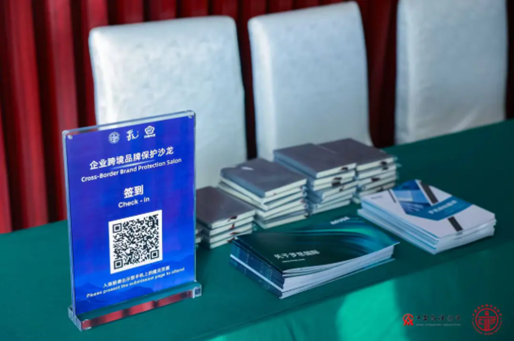
As Chinese enterprises accelerate their pace of going global, cross-border brand protection has become a key factor determining the success or failure of globalization. This salon conducted an in-depth analysis from the macro strategy of international trademark registration to localized practices in key markets such as Europe, Southeast Asia and the Middle East, with the aim of building systematic, end-to-end brand protection solutions for enterprises. Only by continuously focusing on the global intellectual property landscape can enterprises seize new opportunities amid challenges and enable the global journey of Chinese brands to proceed with greater composure and confidence.