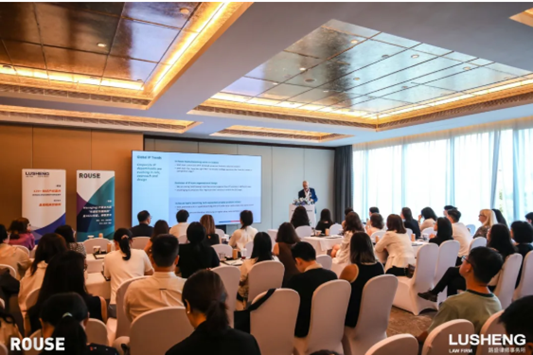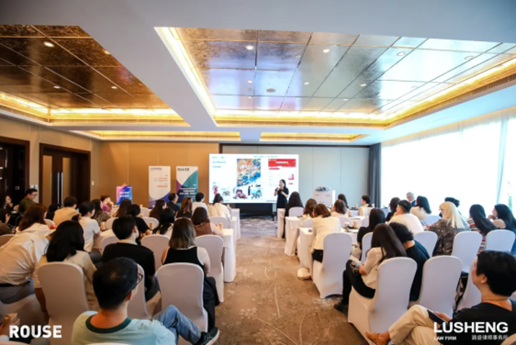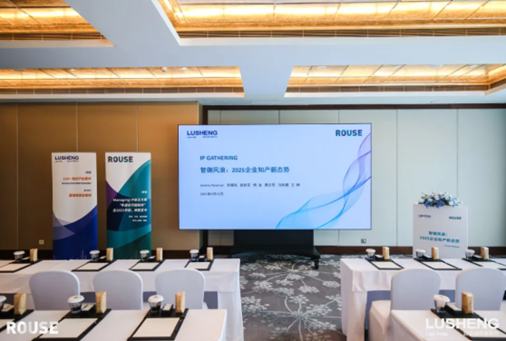

On 11 September, Lusheng Law Firm, together with its strategic partner Rouse, successfully concluded the “IP Gathering” event, delivering to the guests a wealth of intellectually rigorous and practically valuable content in the field of intellectual property. A summary of the key insights shared during the event is set out below.
Evolution of Corporate IP Functions and Adaptation of the IP Service Industry

Jeremy Newman, Partner and Chief Commercial Officer, Rouse
In the opening session, Jeremy analyzed from a macro perspective the profound transformation underway in corporate intellectual property functions, which are gradually shifting from traditional rights custodianship to value creation. Technological enablement has also allowed IP functions to address more complex issues, and the organizational form of IP functions has begun to break through the traditional framework of legal departments. In addition, the IP service industry is facing dual pressures of consolidation and efficiency enhancement, and there is an urgent need to respond to client demands in a more holistic, efficient and cross-disciplinary manner. Finally, he emphasized that the industry should proactively build global product portfolios, accelerate investment in technology, and continuously expand service boundaries so as to support enterprises in building sustainable competitive advantages in a rapidly changing environment.
Overview of Annual Trademark Legislation and Examination Practice in China
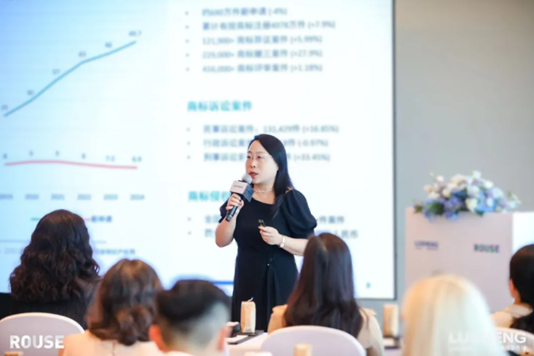
Melanie Zhu, Partner, Principal,Head of Shanghai Trade Marks & Brands , Rouse
Melanie Zhu noted that the amendment to the PRC Trademark Law has been included in the State Council’s legislative work plan and is pending submission to the Standing Committee of the National People’s Congress for deliberation, with the revision of the implementing regulations being advanced in parallel. In July this year, the Measures for the Expedited Examination of Trademark Registration Applications came into effect, focusing on areas of national strategy and facilitating the rapid grant of trademarks relating to science, technology and people’s livelihood. In 2024, the number of trademark applications continued to decline, while the number of registered trademarks in force approached 50 million. The China National Intellectual Property Administration (CNIPA) has implemented new examination rules, raising the burden of proof on applicants for non-use cancellation and cracking down on malicious non-use cancellation applications. At the same time, the CNIPA has responded to public opinion by proactively screening registered trademarks related to people’s livelihood and, ex officio, rejecting or declaring invalid more than 200,000 deceptive trademark applications and registrations. The cases she cited were vivid and engaging, making the interpretation easier to understand.
When Non-use Cancellation Enters “Deep Waters” — Preparedness Leads to Success
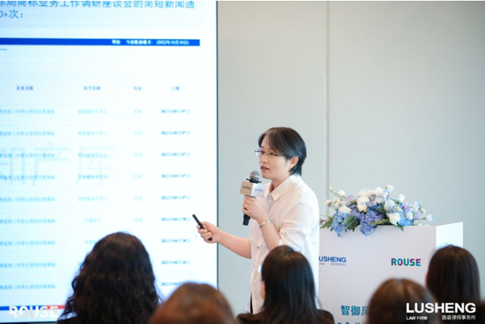
Laura Zhao, Senior Trade Mark Attorney, Rouse
Against the backdrop of a stringent crackdown on malicious non-use cancellation, the threshold for filing such applications has risen significantly. Applicants for non-use cancellation are now required to investigate and provide information on the registrant’s business scope, use of the mark, and industry status, and to explain the reasons for filing the cancellation, in addition to making a good-faith undertaking. This reflects an inherent change in the burden of proof and the logical reasoning required in non-use cancellation proceedings. According to the latest notice from the CNIPA, the policy of cracking down on malicious filings will continue to be advanced, and the strict requirements for non-use cancellation applications will correspondingly remain in place.
With the rapid increase in the number of non-use cancellation cases, many such cases have entered the stages of review, administrative litigation and even retrial, where certain grey areas and focal issues have been clarified through judicial proceedings. In principle, the use of multiple marks on the same goods can support a finding of trademark use, but the trademarks involved should be clearly stipulated in the transaction contracts, and attention should be paid to the risks arising from mixed use with the supplier’s brand. For service marks, due to the intangible nature of services, use is reflected in service premises, transactional documents, advertising materials and exhibitions. According to recent judgments, “training” and “arranging and organizing training courses” fall into different similar sub-classes under Class 41 and must be proven separately. Pure export OEM activities are generally considered to constitute trademark use, but the chain of evidence must be complete. When collecting evidence for non-use cancellation, using sales information of others without authorization is risky, as the other party may be a potential infringer. Whether WeChat Moments constitutes an effective tool for trademark use has been addressed by the Supreme People’s Court in a recent retrial case, in which it rendered a guiding judgment that is both innovative and balanced.
Given the persistently high risks of non-use cancellation, rights holders should establish a “use is king” mindset in order to maintain the validity of registrations and safeguard commercial use and enforcement actions. Conducting a comprehensive review of existing brands, keeping abreast of business developments, and coordinating the evidentiary links across marketing, sales and logistics are the optimal means of addressing these risks.
When Trademarks Collide with the “Absolute Prohibitions” — Dilemmas and Breakthroughs
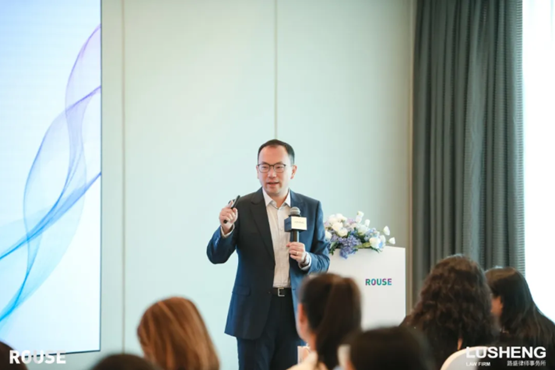
Melvin Mei, Principal, Rouse
When discussing refusals based on absolute grounds,Melvin Mei pointed out that once a trademark application is refused on absolute grounds, the chances of overturning the refusal are very low. At present, refusals on absolute grounds are mainly concentrated on marks that are deceptive or have adverse social impact. The law not only prohibits their registration but also their use, and local market supervision authorities will investigate and penalize the use of such marks based on leads transferred by the CNIPA. He also referred to the remedies available after such marks are refused, alternative solutions, and the risks associated with use, and provided practical and effective response strategies.
Can Product Shape Designs with Functional Considerations Be Protected Under the Anti-Unfair Competition Law?
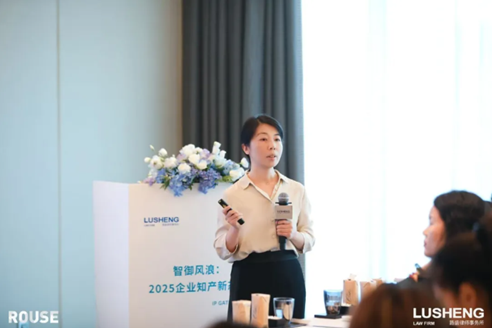
Alice Yu, Head of Shanghai Litigation Team, Lusheng Law Firm
Continuing her usual practice of case sharing, Alice Yu presented cases from both qualitative and quantitative perspectives, analyzing the commercial needs and legal risks that must be comprehensively considered in enforcement actions, thereby providing reference for rights deployment and enforcement strategies. By reference to a case in which product shape was protected as trade dress, she shared the difficulties commonly encountered in similar cases and corresponding solutions, covering multiple aspects including key and difficult issues in the case, judicial practice, formulation of litigation strategies, evidence preparation, conduct of hearings, and post-hearing follow-up. She also offered recommendations on the rights holder’s global rights deployment, enforcement strategies, commercial publicity, and responses to failed three-dimensional trademark applications.
Refined Division of Labor in Infringing Industries: How to Identify the Real Responsible Parties Through Evidence Mining?
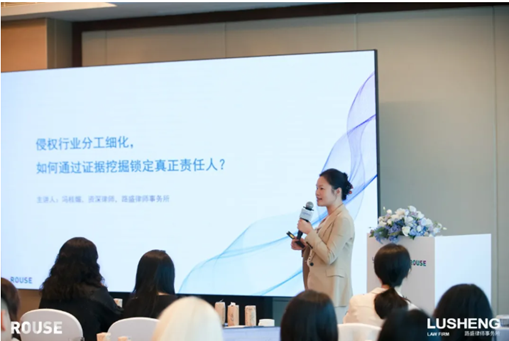
Heidi Feng,Principal, Lusheng Law Firm
The two cases shared by Heidi Feng focused on the mining of evidence and facts. As the infringement industry chain becomes more mature and the division of labor more refined, distributors have become the driving force in the market, while infringers have shifted to small and scattered entities. Infringers may also use nominee shareholding, family-run joint operations, entrusted operations and other arrangements to evade liability, thereby enabling repeated and continuous infringement. In civil IP litigation, how to utilize various evidence collection methods to mine, organize and present factual evidence, prove the defendants’ common intention to infringe, and at the same time make targeted rebuttals to the defenses of different defendants, so as to break the infringers’ “collusion” and effectively hold the relevant parties accountable, is not only the key to achieving a comprehensive victory, but also an important step in ensuring successful enforcement of judgments.
How to Address Various IP Infringement Risks Arising from Economic Downturn

Carol Wang, Managing Partner of Shanghai Office, Global Co-Deputy Head of Dispute Resolution, Lusheng Law Firm
Carol Wang reviewed and analyzed the infringement risks faced by enterprises as defendants. She pointed out that in responding to conventional risks such as pirated software and unauthorized font infringement, in addition to challenging the basis of the opposing party’s rights and the qualifications of its agent and employing negotiation skills, enterprises may also rely more proactively on the Civil Code, the Cybersecurity Law of the People’s Republic of China and other relevant laws and regulations on personal information and privacy protection, and she shared successful case outcomes in this regard. With respect to “patent squatting” and similar “patent trolling” cases, she discussed how to dismantle the opposing party’s rights basis through effective prior-use searches that can “strike at the heart” of the claim. In the absence of prior-use evidence, she explained how to defend by obtaining statements from the original inventor and combining them with evidence of the right holder’s bad faith. She also shared how to reduce litigation risks at the source through patent filing strategies in different jurisdictions and enhanced confidentiality measures in the circulation of samples. In addition, Wang Shan reminded clients that the long-arm jurisdiction provisions in the newly amended Anti-Unfair Competition Law may increase the risk of being sued for infringement as a result of overseas enforcement actions, and discussed how to respond. Finally, she recommended that enterprises take into account various factors in a holistic manner to improve the predictability of both enforcement strategies and risk prevention outcomes.
Event Highlights
During the Q&A session and coffee breaks, the speakers and corporate representatives engaged in lively interactions, exchanging professional insights in the field of intellectual property and creating lasting memories of the event.